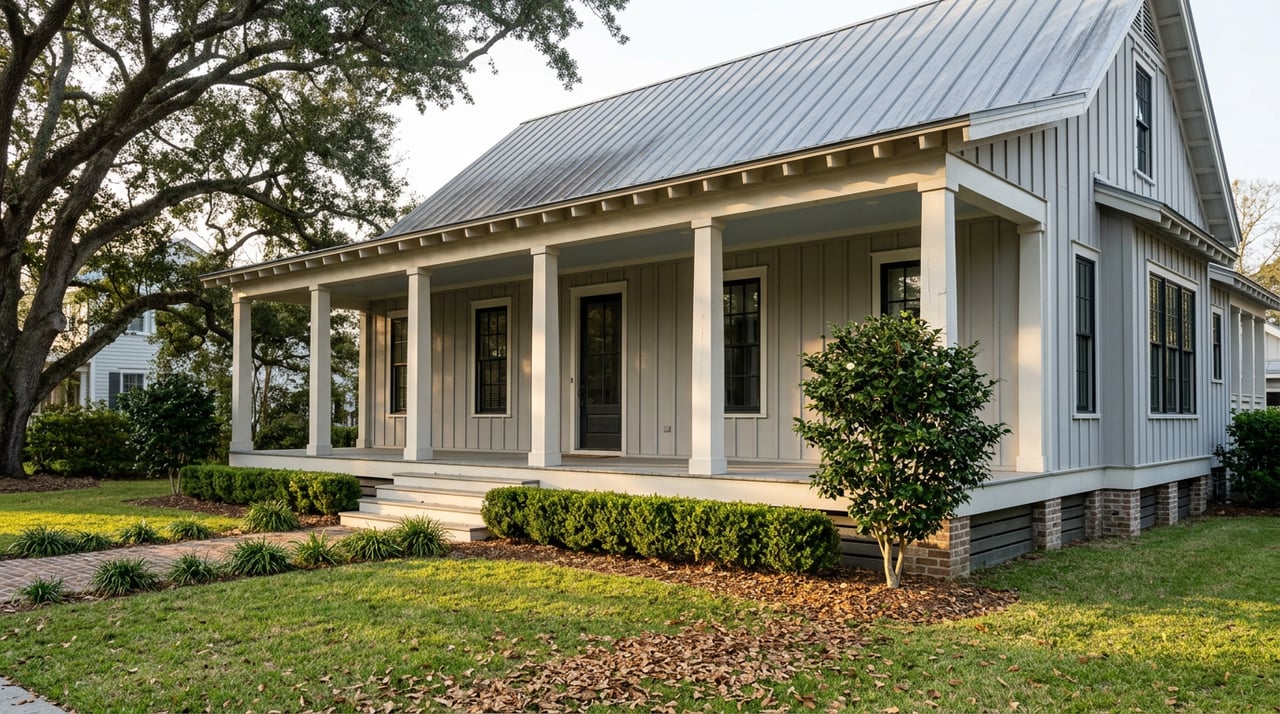
In 2022, a Fairhope city crew watched a house come down on Ingleside Avenue with no permit review beyond the standard demolition paperwork. The home had belonged to Nancy Lewis, a formerly enslaved woman who bought property in Fairhope in the 19th century. It was old. It was meaningful to a lot of people. It was not, in the eyes of the city's rulebook at the time, anything the city had a mechanism to protect. There was no ordinance, no commission, no review board with standing to ask a single question before the bulldozer arrived.
If that same house existed today and someone filed for a demolition permit, the process would look different on paper. Fairhope now has a Historic Preservation Commission, a preservation ordinance, and as of June 2026, Certified Local Government status from the Alabama Historical Commission. That last part has been treated around town as the finish line, the moment the four-year push finally paid off. It's a real milestone. It is also not the thing that changes your risk or your options if you own, or are about to buy, an older house inside Fairhope's downtown core.
The thing that actually changes your transaction is quieter, and it happened two months earlier.
Old and Historic Are Different Words Here
Fairhope's building official, Eric Cortinas, has said the quiet part out loud in council discussions more than once: a lot of the houses people call historic in this town are simply old, and being old and being historic are not the same legal status. In his words, "a lot of the houses that people talk about as historic are nostalgic, but they're not necessarily historic." A structure has to be listed on a state, federal, or county register before any preservation rule can touch it at all.
That distinction matters for a listing description as much as it matters for a demolition permit. The city's own building department points to a 2015 survey by Schneider Historic Preservation, LLC that identified historic structures around town, and city officials have previously put the count of Fairhope's historic buildings at around 200. Appearing in that inventory is not the same as being formally designated. Before this year, there was no consistent public process for how a property moved from "old and charming" to "legally historic." That gap is exactly what changed.
What Actually Changed in April
In April 2026, the Fairhope City Council approved an ordinance that creates a defined process for identifying and designating historic properties and districts inside city limits. Before this, the path from "somebody thinks this house matters" to "this house has protected status" was informal. The new ordinance adds a specific sequence: a historic survey, a recommendation from the Historic Preservation Commission, and then multiple public hearings before the city council can approve any designation.
That is the procedural fact worth sitting with if you own or are buying an older house downtown. Nobody can attach historic status to your property by informal consensus anymore. It takes a survey, a commission recommendation, and public hearings. For a buyer worried about waking up one day to new restrictions on a property they bought as a plain old house, that's a meaningful guardrail. For a seller hoping historic designation might someday add cachet or funding eligibility to a listing, it's also a longer runway than a phone call to city hall.
Here's the sequence, laid out:
| Date | What happened |
|---|---|
| 2022 | Nancy Lewis home on Ingleside Avenue demolished with no historic review possible |
| May 2024 | City council creates Fairhope's first Historic Preservation Commission and passes its first preservation ordinance |
| 2025 | National Park Service rejects the city's first CLG application over technical language in the ordinance |
| July 2025 | Commission proposes a 60-day demolition-review window for historically significant properties; not adopted at that meeting |
| April 2026 | City council approves an ordinance formalizing the historic designation process, aimed at fixing NPS's concerns |
| June 2026 | Alabama Historical Commission confirms Fairhope has received Certified Local Government status |
The Tax Credit Myth
CLG status gets talked about as if it unlocks money for anyone who owns an old house downtown. It does not, at least not directly for most owners. Alabama's Historic Rehabilitation Tax Credit is a 25 percent refundable credit, but it's written for income-producing properties on the National Register that are 75 years or older. If you live in the house, that credit isn't available to you.
The consolation prize for owner-occupants already existed before CLG status showed up: historic homes in Alabama can be assessed for property tax purposes at the state's lowest ad valorem rate, and owner-occupied historic homes generally already qualify for that lowest rate regardless of whether the city holds CLG status. So the credit that would meaningfully offset a renovation budget belongs to landlords and commercial owners, not the family buying a cottage on Fairhope Avenue to live in. What CLG status actually opens up is the city's own eligibility for matching grants and technical assistance through the National Park Service and the Alabama Historical Commission, money that flows to the city's preservation program, not directly into an individual owner's renovation account.
The Proposal That Hasn't Passed Yet
The part of this story with the most direct bearing on a demolition permit is also the part that isn't finished. Back in July 2025, the Historic Preservation Commission's vice chair, Amy Molyneux, brought the council a draft proposal: a 60-day review period before demolition permits could be issued on historically significant properties, with a working threshold of structures 50 years or older. Molyneux described the goal as an approach that would "offer a way out of the loop that balances city goals for preservation with individual property owner rights." Demolition would still be allowed. Owners would just have to sit through one or two commission meetings first, with time to consider alternatives like relocation or salvage before pulling the trigger.
No formal ordinance came out of that meeting. Staff was directed to draft language, and the city council could adopt it either as a standalone ordinance or fold it into the building code. As of the most recent public record, that draft hadn't been formally adopted. If you're weighing a teardown on an older downtown lot, that's worth tracking before you finalize plans, not after you've already applied for a permit.
What This Means If You're Buying or Selling an Older Fairhope House
A few practical takeaways follow directly from the sequence above.
- Don't assume "old" means "historic" in a listing description. Cortinas has been explicit that a structure needs an actual registry listing before any protection or restriction applies. Check the status before you market a house as historic or worry that it might be.
- Don't confuse Fairhope's city Historic Preservation Commission with Baldwin County's separate Architectural Review Board, which oversees four unincorporated historic districts nearby (Point Clear/Battles Wharf, Magnolia Springs, Malbis, and Montrose). A house inside Fairhope city limits answers to the city commission, not the county board, and the two bodies don't share jurisdiction.
- CLG status doesn't retroactively restrict what you can do with a house you already own. It changes what grants the city can apply for and gives future designation efforts a clearer, more defensible legal process.
- If you're planning to demolish a structure that's 50 years or older somewhere downtown, keep an eye on whether the city formally adopts the demolition-review ordinance. Right now there's no mandatory waiting period, but that could change without much public notice once a draft moves to a vote.
- The 25 percent state rehab tax credit is not a renovation subsidy for a house you plan to live in. If a rehab budget depends on that credit, the numbers likely need to assume you won't qualify unless the property will be income-producing.
A Few Direct Questions
Does a house have to be a certain age to count as historic in Fairhope? Age alone doesn't decide it. A property needs to be listed on a state, federal, or county historic register, or go through the city's new designation process, which includes a survey, a Historic Preservation Commission recommendation, and public hearings.
Can I still demolish an old house I own downtown? As of now, yes. There is no adopted waiting period. A 60-day review proposal for properties 50 years or older has been discussed since July 2025 but had not been formally adopted as of the most recent public record.
Will CLG status raise my property taxes? Nothing in the CLG designation changes how individual properties are assessed. Alabama's lowest ad valorem rate for historic homes was already available to owner-occupants before this designation.
If you're weighing whether an older downtown Fairhope property fits your plans, or you're trying to figure out what a specific house's registry status actually is before you list it, that's exactly the kind of local detail worth a real conversation instead of a guess. Top Tier Team works this market every day and can walk through what a property's actual status means for your timeline. Get your free home valuation and let's talk through what you're working with.